
Tariffs as Pressure
Washington uses trade power to force a global choice over Iran.

The United States has taken a sharp turn in its Iran policy by tying global trade directly to political unrest inside the country.
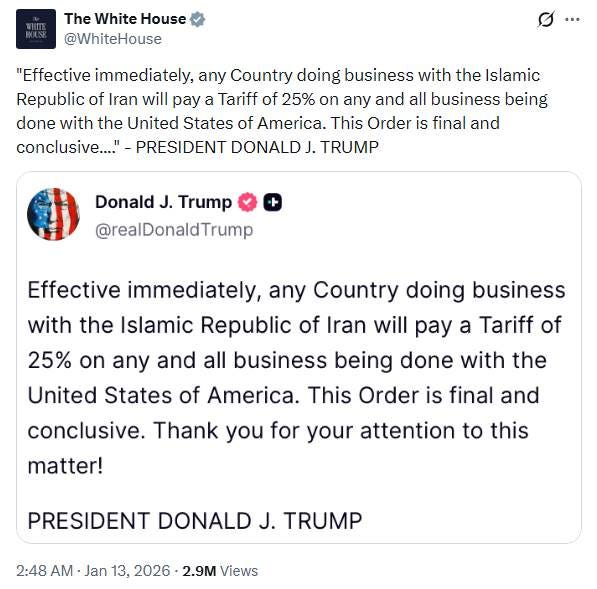
President Donald Trump announced that the United States will impose a 25 percent tariff on all goods from countries that continue to trade with Iran. He revealed the decision on Truth Social, saying it takes effect at once and leaves no room for exceptions. The move goes beyond past sanctions by punishing third countries rather than Iran alone. It targets major economies such as China, India, and Turkey, all of which maintain trade ties with Tehran. The timing is not accidental. Iran has entered its fourteenth day of nationwide protests, with human rights groups reporting more than 500 deaths. By linking tariffs to unrest, Washington has raised the stakes for global trade and regional stability.
At the heart of the policy is oil. China buys close to 90 percent of Iran’s oil exports, according to shipping data and energy analysts. Much of this oil moves through opaque routes using tankers that turn off tracking systems. Past US sanctions tried to block this trade through banks and insurers. The new tariff sidesteps these limits. It does not matter how oil moves or how payments clear. Any country found trading with Iran now faces a flat tax on all its exports to the United States. For China, this presents a painful choice. Iranian oil is cheap and helps smaller Chinese refineries survive. The US market, however, remains vital for Chinese manufacturing. A 25 percent tariff threatens jobs, prices, and growth at a time when China’s economy is already under strain.
India faces a different dilemma. New Delhi stopped buying Iranian oil after earlier US pressure but kept other trade alive. India exports rice, tea, and medicines to Iran and sees the country as a gateway to Central Asia through projects like Chabahar port. Under the new rule, even food and medicine count as trade with Iran. That means Indian exporters could lose access to the US market or face higher costs. Officials in Delhi have long tried to balance relations between Washington and Tehran. This policy removes that space. India must now decide whether modest trade with Iran is worth the risk of steep tariffs on textiles, software, and manufactured goods sent to the United States.
Turkey also stands exposed. Ankara trades machinery, textiles, and food with Iran while importing gas and raw materials. Its economy already suffers from high inflation and a weak currency. A sudden tariff shock could deepen that pain. Other regional traders, including Pakistan and the United Arab Emirates, may also feel pressure, even if their volumes are smaller. The message from Washington is clear. Access to the US market now comes with political conditions. Neutral trade is no longer neutral.
The policy is tightly linked to events on Iran’s streets. Protests began over economic hardship and police abuse but soon turned into a wider challenge to the Islamic Republic. Rights groups report grim numbers. The Human Rights Activists News Agency says security forces have killed at least 512 people, including children. Amnesty International has documented lethal force against crowds and mass arrests across dozens of cities. Authorities cut internet access for days, making independent verification hard. President Trump has voiced open support for the protesters, calling them brave and condemning Iran’s leaders. By choking trade, he appears to believe the regime will struggle to pay security forces and fund repression.
Supporters of the move in Washington see it as long overdue. Senator Lindsey Graham praised the tariff as decisive and moral. He argued that Iran’s government survives on oil money and uses it to fund violence at home and abroad. From this view, forcing countries to stop buying Iranian goods strikes at the core of state power without sending troops. Hawks also argue that past sanctions failed because enforcement was weak. Secondary tariffs remove that weakness by making every trading partner responsible.
Critics counter that tariffs work like taxes and the public pays them. When imports from China, India, or Turkey become more costly, American firms pass those costs on to consumers. Prices rise for clothing, electronics, and household goods. Economists fear that the inflation may rise with the supply chains cured and Markets responding fast to the headline. Terrible movement of stocks because of fear of an even bigger trade war threat. Oil traders got excited by throwing Iranian supplies into the mix of fears about oil prices shooting sky-high. Such reactions would suggest concern that the policy would go beyond retaliation by anyone but China.
The global system is also riskier. The principle has been for many decades that trade rules should keep trade separate from political punishment; this decision breaks that wall. Countries may respond by building new trade blocs that exclude the United States. Russia and China already seek ways to trade outside the dollar system. This move gives them fresh reasons to speed up that work. Smaller states may feel forced to pick sides, weakening institutions such as the World Trade Organization that rely on shared rules rather than raw power.

Inside Iran, the effect remains uncertain. Inflation is rampant, jobs are sparse, and every passing month sees an increase in the prices of basic goods. Any cut to oil revenue could do little to relieve such pressures and may even fan dissatisfaction further or stiffen state resolve. Sanctions, as history shows, tend to hurt ordinary citizens before hurting the ruling elites faster. Should the protests be crushed under force, the sanction might remain a punishment without change. If, however, the protests grow, Washington would have a stake in claiming credit. Either way, lives are at risk.
This policy shows how far US foreign policy has shifted toward using market access as leverage. It treats the American economy as a gate that others must pass through on Washington’s terms. For allies and rivals alike, the lesson is stark. Trade now comes with political obedience attached.
In conclusion if a 25 percent tax were to be imposed on countries trading with Iran, this would be turning the corner. It ties international trade to grassroots dissent and shoves countries to choose between markets and principles. This will surely put more pressure on Tehran and show solidarity with their protesters; it may also lead to an escalation of prices, trade tensions, and fractures in the global community. The actual costs will not be borne about in declaratory statements but rather in the marketplaces, the streets, and the lives.
Published in Paradigm Shift Pakistan on January 19, 2025