
Lives without trace
Enforced disappearances in Pakistan reveal a quiet war between unchecked power and basic rights.

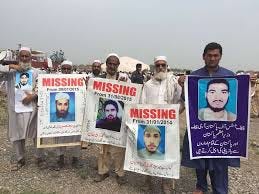
For years, enforced disappearances have haunted Pakistan’s political and social life. Men are taken from homes, streets, and workplaces, often in front of witnesses, and then vanish. Their families move between police stations, courts, and protest camps, chasing a truth the state refuses to speak clearly. The crisis is most severe in Balochistan and Khyber Pakhtunkhwa, but its shadow stretches far beyond provincial borders.

Even though it is not entirely acknowledged, the scale of the problem can be recorded. The Commission of Inquiry on Enforced Disappearances has been tracking cases since 2011. According to official figures recorded by ANI News, the number of registered cases exceeded 10,000 by the beginning of 2024 and reached 10,285 by mid-2024, with 197 new cases in just six months. Reports cited in Deccan Herald mention 379 new cases added by the end of 2024. By August 2025, the count had risen to over 10,590, according to data referenced by Voice PK.
Officials often point to disposal rates as proof of progress. The commission claims that around 8,986 cases have been disposed of, roughly 83 percent of the total. Of these, 6,809 people were traced. Yet more than 1,600 cases remain under investigation, and many “resolved” cases end without explanation or accountability. In provinces like Balochistan and Khyber Pakhtunkhwa, where mistrust of the state runs deep, families say many disappearances are never reported at all, a concern echoed by Amnesty International.
The limits of the commission are well known. It can summon officials and issue recommendations, but it cannot prosecute. Human rights groups such as the International Commission of Jurists note that despite hundreds of court orders to produce missing persons, no security official has been convicted for enforced disappearance. Monthly updates published by the Pakistan Information Department show routine hearings and field visits, but they also confirm the absence of criminal trials.
Allegations against intelligence agencies are not new. The 2012 Shahzad Commission recorded claims of intimidation linked to the ISI while investigating the killing of journalist Saleem Shahzad. Although the commission avoided direct blame, it acknowledged a climate of fear. Later investigations by Human Rights Watch documented cases where victims were last seen in the custody of security forces or picked up with police cooperation. These reports highlight a mechanism by which denials, rather than answers, continue to supplant responses and wherein secrecy cloaks responsibilities.
Courts have not been able to fill the lacuna. Families have filed habeas corpus applications under Section 491 of the Criminal Procedure Code with the prayers requesting such orders to be given for the recovery of missing persons. As explained by AUJ Lawyers, courts dismiss such petitions in the absence of any official detention record, directing police to conduct inquiries instead. The Supreme Court, which has taken cognizance of disappearances since 2005, had earlier confirmed that hundreds of missing persons were indeed alive in the custody of the State, as substantiated in Criterion Quarterly. However, this sort of endorsement hardly leads to punishment.
Preventive detention laws aggravate the problem. The Anti-Terrorism Act provides, in essence, for the detention of suspects without an indictment for 90 days and permits significantly more extended powers of inquiry through further provincial amendments. Legal research published in the Journal of Defence and Security Studies explains the tendency of these laws to obliterate that difference between legal detention and enforced disappearance. When detainees are not produced before a magistrate or their families are not informed, legality becomes a matter of paperwork rather than justice.
The human cost is severe and lasting. Families of the disappeared live with constant uncertainty, a form of grief without closure. Psychological studies referenced by Amnesty International and academic research in Frontiers in Psychology show high levels of anxiety, depression, and economic hardship among relatives. In Quetta, families have staged sit-ins outside the Press Club for years. Nationwide protests and hunger strikes first caught the international eye but were followed by arrests and intimidation, as per The Diplomat.
Those who looked at these atrocities internationally offered little relief. Despite the repeated requests of the UN Working Group on Enforced or Involuntary Disappearances, Pakistan has been unwilling to criminalise enforced disappearance and prosecute its executors. Promises made in Universal Periodic Review sessions have so far stalled or introduced loopholes, much to the dismay of Amnesty International. Missing persons seem to be a commodity: when strategic interests are at stake, human rights suffer, leaving these victims with few avenues for redress!
Indeed, in Pakistan, enforced disappearances are tolerated rather than unknown. Documenting cases does not equate to granting justice. Prosecutions, independent oversight of agencies responsible for security, and legislation that protects rather than permits the abuse should be there for curbing the practice, and unless they are, thousands of families will remain suspended between hope and silence, waiting for loved ones who may never return.